

Table of Contents
- How to Reduce Fine Lines Naturally: The Honest Starting Point
- What Actually Causes Fine Lines (and What You Can Change)
- Your Daily Skincare Routine for Fine Lines
- Sun Protection for Ageing Skin: The Step Most People Skip
- Natural Ingredients and Home Remedies: What Works and What Doesn't
- Lifestyle Habits That Soften Fine Lines Over Time
- At-Home Facial Devices for Fine Lines: What to Expect
- How Long Does It Take to Reduce Fine Lines?
- Frequently Asked Questions
Last Updated: October 13, 2026
How to Reduce Fine Lines Naturally: The Honest Starting Point
Fine lines are small creases that form where skin has lost some of its natural bounce, and learning how to reduce fine lines naturally comes down to three things: daily sun protection, steady hydration, and habits that support collagen.
There is no single step that erases lines overnight. Skin changes slowly, and it responds to what you do most days, not what you do once.
Below, we break down the causes you can influence, a simple routine by skin type, an honest grading of popular home remedies, and realistic timelines so you know what to expect.
What Actually Causes Fine Lines (and What You Can Change)
Fine lines come from a mix of time, sun and daily habits. Some causes are fixed, but most of the ones that matter day to day are within your control.
Collagen, Elasticity and the Ageing Process
Collagen is the protein that gives skin its firmness, and elastin lets it spring back. From the mid-twenties onward, the body makes less of both. Skin thins, elasticity drops, and small creases start to hold their shape instead of smoothing out.
You cannot stop this process. You can slow how quickly it shows by protecting the collagen you have.
Sun Exposure, UV Rays and Premature Skin Ageing
Sun exposure is the biggest driver of premature skin ageing. UV rays break down collagen and elastin over years, which is why lines often appear first on the face, neck and hands.
Daily sun protection is the single most effective step for fine-line prevention. It matters more than any serum or mask.
Your Daily Skincare Routine for Fine Lines
A good skincare routine for fine lines is short and repeatable: cleanse gently, hydrate, protect in the morning, and support repair at night. Consistency beats complexity every time. The detail most guides skip is that the right routine depends on your skin type, and that some ingredients should not be layered together.
Morning and Evening Steps That Support Skin Hydration
Morning:
- Rinse with lukewarm water or a mild cleanser
- Apply a hydrating serum or moisturiser
- Finish with broad-spectrum sunscreen
Evening:
- Remove sunscreen and makeup fully
- Apply a richer moisturiser to support the skin barrier overnight
- Add a facial massage for a minute or two
Dehydration lines are a common false alarm. When skin lacks water, fine lines look deeper than they are. A simple moisturiser often softens them within days. Look for humectants like glycerin, plus ceramides or squalane to lock water in.
A Simple Routine by Skin Type
Dry skin: Use a cream cleanser, a hyaluronic acid or glycerin serum, and a rich moisturiser with ceramides.
Oily skin: Choose a gel cleanser and a lightweight, non-comedogenic moisturiser. Niacinamide serums can help balance oil without heaviness. Do not skip moisturiser, dehydrated oily skin often produces more oil.
Sensitive skin: Keep the routine to three or four products. Fragrance-free formulas are safer. Introduce one new product at a time and patch test first.
Mature skin: Layer a hydrating serum under a richer moisturiser. Ingredients like peptides and vitamin C are commonly used to support collagen and even tone, but introduce them gradually.
Ingredient Interactions and How to Introduce Products
Some ingredients work well together; others can irritate when combined. A common pattern is to alternate rather than layer.
- Vitamin C and retinol: Use vitamin C in the morning and retinol at night. Together they can irritate.
- Retinol and acids (AHA/BHA): Do not use on the same night. Alternate evenings.
- Niacinamide and vitamin C: Generally fine together, but some people find the combination stings. Introduce separately first.
- Benzoyl peroxide and retinol: Can deactivate each other. Use at different times.
Introduce one active at a time, wait two weeks before adding another, and stop if you see persistent redness or stinging. If you are unsure, a pharmacist can advise on interactions with any prescription skin treatments.
Sun Protection for Ageing Skin: The Step Most People Skip
Sun protection for ageing skin means a broad-spectrum sunscreen every morning, reapplied through the day, plus protective clothing and shade where you can. It is the most skipped step and the most important.
Choose a broad-spectrum sunscreen with SPF 30 or higher. Apply it as the last step of your morning routine, and again if you are outside for long.
According to Cancer Research UK's sun safety guidance, UV damage builds up over time, which is why daily habits matter more than occasional effort. Self-tanner gives colour without UV exposure, so it is a safer route to a glow.
Natural Ingredients and Home Remedies: What Works and What Doesn't
Some natural ingredients help, and some do nothing or cause irritation. The table below grades the popular ones so you can spend your time well. We also separate remedies with human clinical evidence from those supported mainly by tradition or laboratory research, and flag the DIY ingredients that can harm skin.
| Remedy | What It May Do | Evidence Level | Verdict | Caution |
|---|---|---|---|---|
| Aloe vera | Soothes and hydrates | Some human evidence for soothing | Helpful | Patch test first |
| Green tea | Antioxidants, calming | Laboratory and some human evidence | Helpful | Avoid if sensitive to caffeine |
| Olive oil | Softens skin | Limited human evidence | Mixed | Can clog pores |
| Coconut oil | Moisturises | Limited human evidence | Mixed | Comedogenic for some |
| Banana or avocado mask | Temporary hydration | Tradition and laboratory only | Mild | Little lasting effect |
| Egg whites | Tightens briefly | Tradition only | Skip | Tight feeling is temporary |
| Essential oils | Scent, some calming | Varies by oil; some human evidence | Careful | Common irritant |
| Lemon juice | Exfoliates briefly | No reliable human evidence | Avoid | Can burn or irritate skin |
| Baking soda | Exfoliates | No reliable human evidence | Avoid | Disrupts skin barrier |
Evidence Grading for Popular Natural Remedies
Think in tiers. Aloe vera and green tea have a reasonable reputation for soothing and antioxidant support, with some human evidence behind them. Olive and coconut oil can moisturise but may clog pores, and the evidence for fine lines specifically is limited. Banana, avocado and egg-white masks feel nice for an hour and change little long term, their support comes mainly from tradition and laboratory research, not human trials.
No home remedy removes lines. They support skin, and support is worth having. But it is worth knowing which claims are backed by human evidence and which are not.
Safety, Irritation and Allergy Guidance
Natural does not mean safe for every skin. Plant ingredients can trigger allergies, and essential oils are a frequent culprit. Acidic DIY ingredients such as lemon juice or baking soda can disrupt the skin barrier, cause burns or make redness worse, they are not a safe substitute for a formulated exfoliant.
- Always patch test on the inner forearm for 24 hours
- Introduce one new product at a time
- Stop if you see redness, stinging or swelling
- Avoid lemon juice, baking soda and undiluted essential oils on the face
- See a pharmacist or GP if a reaction persists
Lifestyle Habits That Soften Fine Lines Over Time
Daily habits shape skin as much as products do. Sleep position, smoking, diet and water intake all play a part.
- Sleep on your back where you can, to reduce sleep creases
- Do not smoke, as it speeds collagen breakdown
- Eat healthy fats, protein and colourful vegetables for vitamin A, C and E
- Drink enough water through the day
- Ease repetitive facial expressions where you notice them
Facial exercises and facial massage can support circulation and relaxation. They will not rebuild collagen, but they are a pleasant, low-cost addition.
According to NHS advice on healthy eating, a balanced diet supports skin repair from the inside. Antioxidants in fruit and vegetables help protect skin cells from everyday stress.
At-Home Facial Devices for Fine Lines: What to Expect
At-home facial devices for fine lines use technologies like microcurrent to give skin a temporary, refreshed look with regular use. They are a convenience option, not a replacement for professional clinical treatment.
Microcurrent passes a very low-level current through the skin. EMS, or electrical muscle stimulation, targets the muscles beneath. The two are often mentioned together, but they are not identical: microcurrent works at a lower level, while EMS aims at muscle activity.
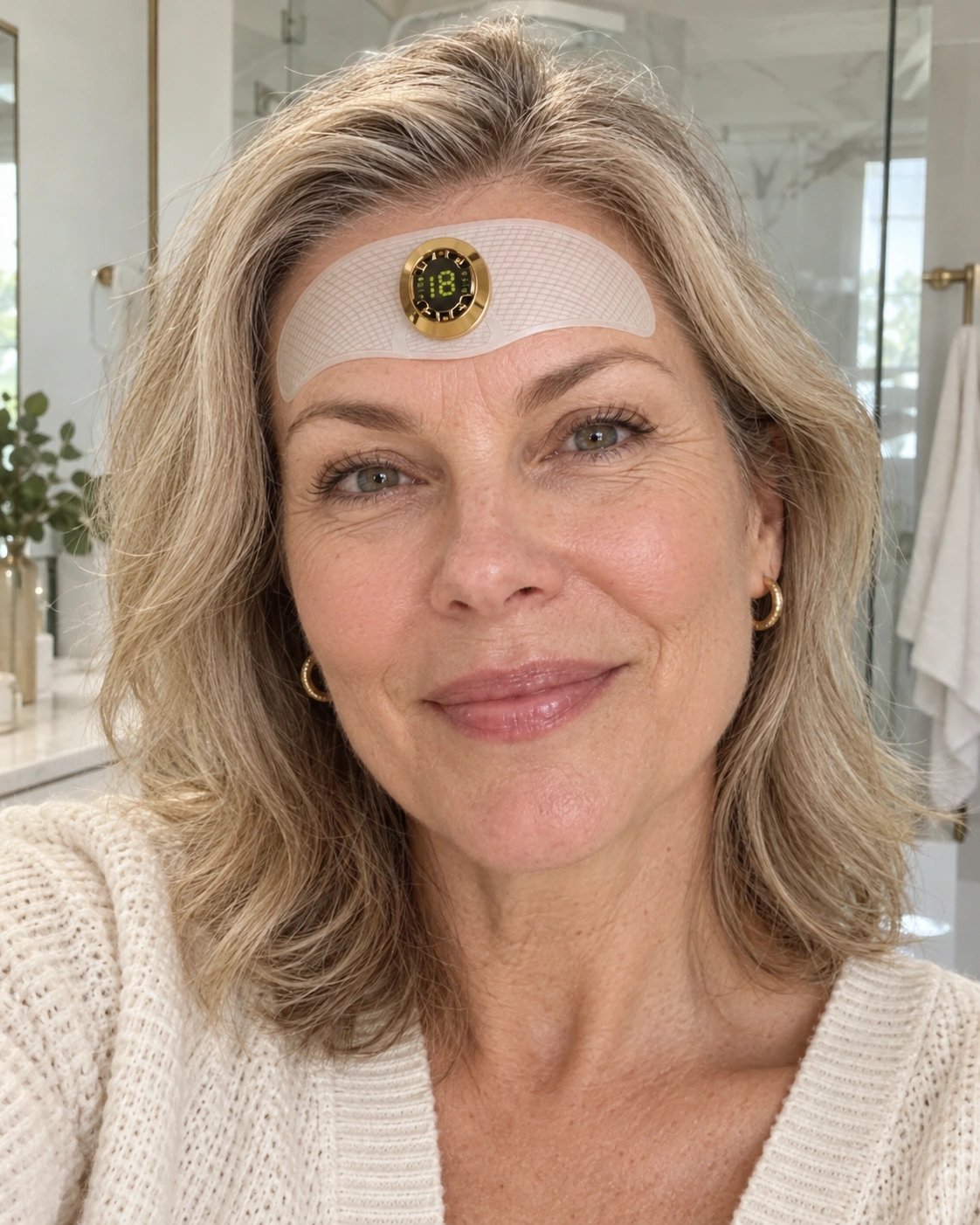
EMSTIGHT makes wearable EMS microcurrent devices for home use. The EMS Microcurrent Face Mask runs a 15-minute session and switches off on its own, so there is no wand to hold. For targeted areas, the EMS Eye Patches and EMS Cheek Patches cover specific zones hands-free.


Realistic expectations matter. Devices like these support a routine. They do not promise permanent wrinkle removal, and results fade if you stop.
How Long Does It Take to Reduce Fine Lines?
Most people notice softer, more hydrated skin within two to four weeks of a consistent routine.
Nothing here works in a week. Skin renews slowly, and collagen support is a long game.
- Week 1-2: skin feels more hydrated, lines look softer
- Week 4-8: texture and firmness improve with steady care
- Week 8-12: fine lines look less pronounced in good light
If lines are deep, changing quickly, or come with other symptoms, see a GP or a qualified skin professional. Some concerns need medical advice, not a home routine.
According to NHS guidance on skin conditions, persistent or unusual skin changes are worth checking. Knowing when to seek help is part of good skincare.
Frequently Asked Questions
Can fine lines be removed naturally?
Fine lines can be softened and their appearance reduced, but they cannot be permanently removed without clinical intervention. Natural approaches work best on early, surface-level lines caused by dehydration and sun exposure. Consistent sun protection, moisturising and habits like back sleeping can visibly improve skin texture over several weeks. Deeper lines formed by years of collagen loss will respond less dramatically. Think of natural methods as slowing and softening the process, not reversing it.
How long does it take to reduce fine lines with a consistent routine?
Most people notice early changes in skin hydration and texture within two to four weeks of a consistent skincare routine. Visible softening of fine lines typically takes eight to twelve weeks, because skin cell turnover and collagen support work slowly. At-home facial devices for fine lines, such as EMS microcurrent patches used consistently, may support this process alongside your routine. Results depend on your skin type, lifestyle and how regularly you follow the steps.
Does facial massage or at-home facial devices actually help with fine lines?
Facial massage can temporarily improve circulation and reduce puffiness, which makes skin look fresher and lines appear softer. At-home facial devices for fine lines, including EMS microcurrent options, work on a similar principle: consistent short sessions may support the appearance of skin firmness over time. Neither replaces sun protection or moisturising. Results build gradually with regular use, so consistency matters far more than session length.
What daily habits help prevent fine lines from becoming more noticeable?
The habits with the strongest impact are daily broad-spectrum sunscreen, keeping skin hydrated with a moisturiser suited to your skin type, avoiding smoking, and sleeping on your back to reduce sleep creases. Eating colourful vegetables, healthy fats and enough protein supports skin barrier function. Drinking enough water helps with overall skin hydration. These habits work together over years, so starting now matters more than perfecting any single one.
Fine lines are stubborn, and the internet is full of quick fixes that do not deliver. A steady routine, daily sun protection and realistic tools make the real difference. EMSTIGHT offers hands-free EMS microcurrent devices, including the 15-minute face mask and focused eye, cheek and forehead patches, designed for consistent, considered care at home. Explore the EMSTIGHT range and build a routine you can actually keep.


